Concrete vs Pavers for Your Driveway: Which Is the Better Investment in 2026?
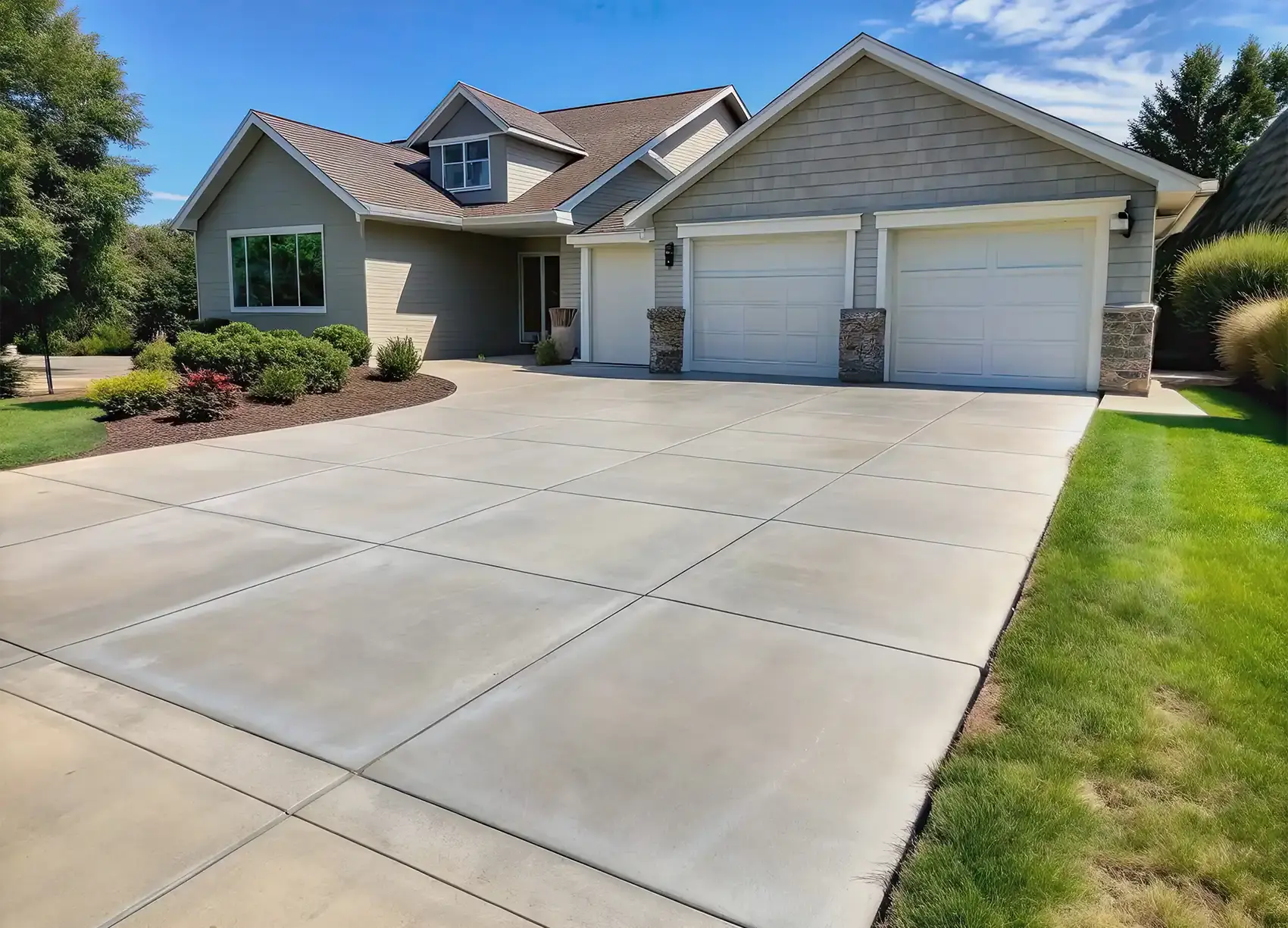
When planning a new driveway, homeowners in the Pacific Northwest face a critical decision: concrete or pavers? Both materials offer unique advantages, but understanding their long-term value, maintenance requirements, and performance in our regional climate is essential for making the right investment.
At Material Masters Concrete, we’ve installed hundreds of driveways across Olympia, Tacoma, and Longview, WA. Here’s everything you need to know to make an informed choice for your property.
Understanding the Basics: Concrete vs Pavers
Concrete driveways are poured as a single, continuous surface. Modern concrete offers versatility through stamping, coloring, and finishing techniques that create attractive, durable surfaces.
Paver driveways consist of individual interlocking units—typically brick, stone, or concrete blocks—arranged in various patterns. Each paver is separate, creating a modular surface.
Cost Comparison: Initial Investment vs Long-Term Value
The concrete driveway vs paver driveway debate often starts with price. Standard concrete driveways typically cost $6-12 per square foot installed, while pavers range from $10-25 per square foot, depending on material quality and pattern complexity.
For a typical 600-square-foot driveway:
- Concrete: $3,600-7,200
- Pavers: $6,000-15,000
However, initial cost isn’t the complete picture. Maintenance, longevity, and repair costs significantly impact your total investment over 20-30 years.
Ready to discuss your driveway project? Contact Material Masters Concrete for a free consultation and detailed quote tailored to your property.
Durability and Lifespan in Pacific Northwest Weather
Washington’s wet winters and temperature fluctuations test driveway materials differently.
Concrete durability: Properly installed concrete driveways last 30-40 years. Our climate’s freeze-thaw cycles can cause cracking if installation doesn’t include proper base preparation and drainage. Quality concrete with air entrainment resists freeze damage effectively.
Paver durability: Individual pavers typically last 50+ years, but the overall system requires more maintenance. Pavers can shift, settle unevenly, or develop weed growth between joints. However, their modular nature means damaged sections are easily replaced.
Maintenance Requirements: Time and Money
When evaluating concrete vs pavers driveway maintenance, consider these factors:
Concrete Maintenance
- Seal every 2-3 years to prevent staining and moisture penetration
- Clean with pressure washer annually
- Address cracks promptly to prevent expansion
- Minimal weed concerns
- Lower ongoing maintenance costs
Paver Maintenance
- Re-sand joints every 2-3 years
- Seal periodically to maintain color and prevent staining
- Regular weed removal from joints
- Releveling sections that settle or shift
- Higher ongoing maintenance investment
Aesthetic Options and Curb Appeal
Both materials offer impressive design flexibility.
Concrete aesthetics: Stamped concrete can mimic pavers, stone, brick, or tile. Color options range from subtle earth tones to bold statements. Decorative finishes like exposed aggregate or broom textures add character. Modern concrete delivers premium looks at accessible prices.
Paver aesthetics: Endless pattern possibilities (herringbone, basketweave, running bond) and material choices (clay brick, natural stone, concrete pavers) create distinctive looks. Mix colors and sizes for custom designs. Pavers offer unmatched visual variety.
Need design inspiration? Our experienced team can show you samples and discuss options that complement your home’s architecture. Schedule a consultation today.
Installation Time and Disruption
Project timelines matter, especially if you need to park elsewhere during installation.
Concrete installation: Typically completed in 3-5 days, including excavation, base preparation, forming, pouring, and finishing. Cure time requires waiting 7 days before driving on the surface. Faster overall project completion.
Paver installation: Takes 5-10 days depending on size and pattern complexity. More labor-intensive with precise grading, base preparation, edge restraints, and individual paver placement. However, you can drive on pavers immediately after installation.
Repair Considerations
Eventually, all driveways need repairs.
Concrete repairs: Cracks and damage are permanent visible repairs. Matching color and texture in patched areas proves challenging. Extensive damage may require complete replacement of sections.
Paver repairs: Individual damaged pavers are easily replaced without visible patches. Settlement issues are corrected by releveling affected sections. Modular design simplifies repairs significantly.
The Best Driveway Material for Your Situation
So which is the best driveway material for your home?
Choose concrete if you want:
- Lower initial investment
- Minimal ongoing maintenance
- Faster installation
- Smooth, seamless surface
- Modern decorative options at reasonable cost
Choose pavers if you want:
- Maximum design flexibility
- Easy future repairs
- Traditional or Old World aesthetic
- Long-term investment (50+ years)
- Immediate usability after installation
Why Material Masters Concrete?
With over 30 years of concrete industry experience, Material Masters Concrete brings unmatched expertise to every driveway project. We serve homeowners throughout Olympia, Tacoma, Longview, and the broader Pacific Northwest region.
Our full-time crews (never subcontractors) ensure consistent quality and communication. We understand our regional climate’s unique demands and engineer every installation for long-term performance.
Ready to transform your property with a beautiful, durable driveway? Call (360) 429-0252 or request a free consultation today.
Frequently Asked Questions
Concrete is significantly cheaper initially, costing $6-12 per square foot versus $10-25 per square foot for pavers. For a standard driveway, you’ll save $2,000-8,000 by choosing concrete. However, factor in long-term maintenance costs when evaluating total investment.
Individual pavers last 50+ years, outlasting concrete’s 30-40 year lifespan. However, paver systems require more maintenance (releveling, re-sanding, weed control) over time. Well-maintained concrete can reach its full lifespan with minimal intervention.
Pavers handle freeze-thaw cycles better than concrete because gaps between units allow expansion without cracking. However, improperly installed concrete with good air entrainment rarely cracks from freezing. Both materials perform well in Pacific Northwest winters with correct installation.
DIY driveway installation is extremely challenging and risky. Poor base preparation, drainage issues, or improper concrete mixing lead to costly failures requiring complete replacement. Professional installation includes proper engineering, equipment, and warranties that protect your investment.
Both well-installed driveways add curb appeal and value. Pavers may command slightly higher perceived value due to premium appearance, but concrete offers excellent ROI with lower initial cost. The best choice depends on your home’s style, neighborhood standards, and budget.
Material Masters Concrete — Serving Longview, Cowlitz County, and Southwest Washington — materialmastersconcrete.com